
Quick answer
A digital loyalty card Dubai setup should make joining easy, let staff validate rewards fast, and fit the way your venue already takes orders and payments. Wallet passes, WhatsApp based cards and coalition networks all work differently, so the best choice is the one that suits your counter flow, branding and reporting needs.
- Wallet passes suit simple sign up and reminders.
- WhatsApp based cards stay inside a chat thread.
- Coalition networks work better for multi merchant ecosystems.
- Staff should validate rewards without slowing the till.
If you’re comparing a digital loyalty card Dubai option for a restaurant, cafe, salon or other repeat-visit venue, the real work is in the details. Guests need to join easily, staff need to validate rewards fast, and the setup has to fit the way your team already takes orders and payments.
The UAE market is ready for it. GlobeNewswire estimated the UAE loyalty programs market at $490.8 million in 2025, and Redseer’s research shows loyalty members account for a much bigger share of spend than their share of shoppers. That doesn’t mean every platform suits every venue. Wallet passes, WhatsApp-based cards and coalition networks all solve different problems.
For venues that depend on repeat visits, the question is less about how many features the software lists and more about how cleanly it works at the counter. If you want a clearer model for guest retention, a repeat-visit rewards club for venue guests is worth comparing with generic apps and card substitutes.
What a digital loyalty card Dubai businesses should expect
A digital loyalty card can live in Apple Wallet or Google Wallet, run through WhatsApp, or sit inside a broader rewards programme. In Dubai, the right format depends on how your guests prefer to join and how much control you want over branding, reporting and redemption. The main options are not interchangeable.
Wallet passes, chat-based cards and coalition programmes
Wallet passes suit venues that want a simple add-to-phone experience. The guest scans a QR code and saves the card to a mobile wallet, which can support reminders and balance updates. WhatsApp-based loyalty keeps the experience inside a chat thread, which suits brands that already communicate there. Coalition programmes are broader networks where guests earn across multiple merchants, which can work well for large ecosystems but gives a single venue less direct control.
Red Dot Rewards is built around the venue’s own name, with points, tiers and rewards, and the guest uses one card while staff use one scanner on any phone. It is designed for restaurants, cafes and similar venues in the UAE, where the reward needs to be simple enough to run during service and visible enough for managers to track through Growth Hub reports and guest approval.
| Factor | Wallet pass | WhatsApp-based card | Coalition network |
|---|---|---|---|
| Guest experience | Adds a card to Apple or Google Wallet | Lives in a chat thread | Works across multiple merchants |
| Brand control | High | High | Shared across partner brands |
| Operational fit | Good for simple sign-up and reminders | Good for chat-first audiences | Better for multi-merchant ecosystems |
| UAE examples from the research set | Wally, YourLoop | Dopamine | SHARE, Smiles, Entertainer-style coalition models |
Source: Red Dot Marketing Research, compiled from the sources listed at the end of this article. Figures are indicative and vary by brand and campaign.
Reviocard’s comparison of Apple Wallet and physical cards makes one practical point clear: the digital version removes the need for a guest to carry a separate piece of plastic. Wally and YourLoop both reflect the wallet-first approach seen in the UAE market, while Dopamine shows how loyalty can also run through messaging. The right option depends on how your venue already communicates with guests, not on which page has the longest list of features.
What matters in a digital loyalty card review
If you’re reading a digital loyalty card Dubai review, check whether it explains the guest flow. Can someone join in a few seconds at the counter? Can staff validate the reward without leaving the till screen for long? Can the manager see what was issued and approved? A good review should tell you that, not just whether the interface looks polished.
For many independent venues, the safest choice is the one that keeps the journey short. That’s why wallet passes and simple staff scanners often suit cafes and restaurants better than a custom app that asks the guest to download, register and remember yet another login.
How to launch it without slowing service
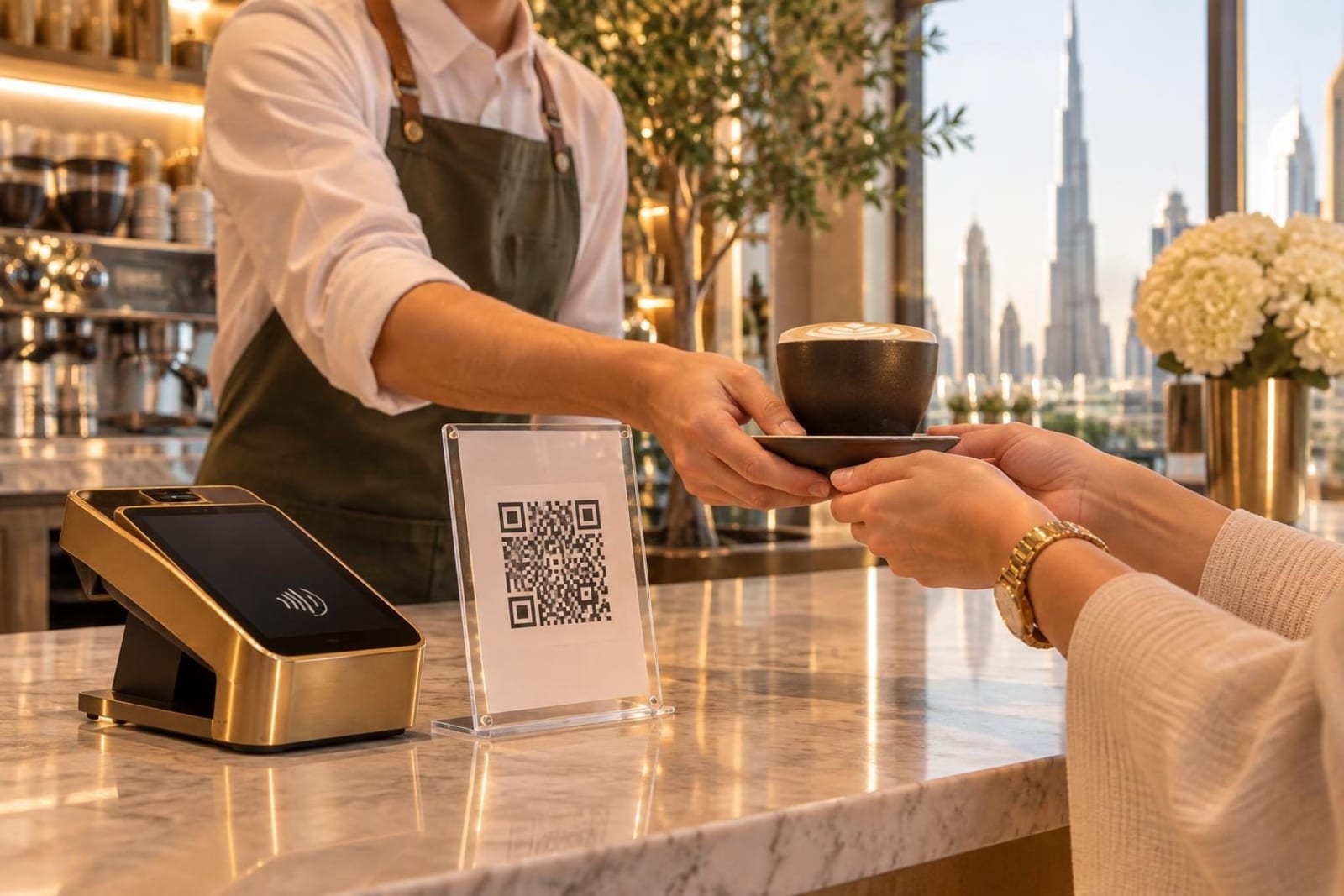
A loyalty setup works best when the sign-up step sits where the guest is already paying attention. That usually means the counter, the receipt, the table tent or a QR stand near the till. If the process asks for too much explanation, staff will avoid using it when service gets busy.
1. Start with the reward, not the software
Decide what the guest earns first. A first-stamp incentive, a points balance or a tiered reward can all work. The key is clarity. If the value is obvious in one glance, staff can explain it quickly and the guest can decide without hesitation.
2. Keep the sign-up prompt short
A counter QR stand should do one job: tell the guest what to do next. In practice, the best prompt uses direct language, a visible incentive and a clear call to scan. Avoid long copy. Keep the design readable from a short distance and make the code easy to scan in low light.
3. Train one staff routine
Staff need one routine for enrollment and one for redemption. Red Dot Rewards uses one guest card and one scanner on any phone, with points appearing in seconds at the till. That reduces the need for extra hardware and keeps the process usable for fast-moving service teams.
4. Link acquisition and retention
A loyalty card should not sit apart from your campaign work. If guests are already arriving through paid media or organic discovery, the reward layer is where you capture the return visit. Red Dot Rewards works with Red Dot Ads, so a venue can use one system to bring guests in and another to bring them back. That pairing matters for restaurants and cafes that want a cleaner path from first visit to second visit.
POS fit, Arabic support and UAE compliance
The practical test for any digital loyalty system is how it behaves beside your current tools. Many Dubai venues use Foodics, Revel, Lightspeed or Clover. The loyalty layer should work with the till process you already use, whether that means a staff scanner web app or another validation method that does not slow the queue.
POS integration is the real test
A platform can look polished and still fail on the floor if it does not match your workflow. Check how rewards are approved, how duplicate redemptions are prevented and how quickly the cashier can move from sale to stamping. If your team needs to switch screens too often, the system becomes harder to use during service.
Arabic support needs to be native, not just translated
Dubai audiences are multilingual, so the card, the staff interface and any guest prompts should handle English and Arabic properly. Right-to-left layout, readable button placement and clear Arabic wording matter. If the design feels awkward in Arabic, people notice immediately, especially at the point of sale.
Consent and reporting should stay visible
UAE data protection requirements apply when you collect guest names, phone numbers or visit histories. Keep opt-in clear and keep reporting visible to the people who manage the programme. Red Dot Rewards runs from Growth Hub with reports and guest approval, which is useful if you want to see what has been issued and approved without digging through settings.
⚠️ Common Mistakes to Avoid
- Buying before checking the till flow: A loyalty tool should fit the checkout process you already use, not force the team into a slower routine.
- Ignoring Arabic presentation: If the right-to-left layout looks awkward, the experience feels unfinished even when the reward is simple.
- Collecting data without clear opt-in: Keep consent explicit and easy to review, especially when phone numbers or visit history are involved.
- Choosing a model that does not match your business: Coalition networks suit broad ecosystems, while single venues usually need more direct brand control.
For venue operators comparing options, the question is not whether the platform has a long feature list. It is whether the card can sit beside your current POS, your current language needs and your current approval process without creating extra work for staff.
Pricing, value and what to check before you buy
Local SaaS plans in the UAE commonly sit in the AED 69 to AED 180 per month range, according to the market notes reviewed for this article. More tailored setups are usually quoted after a short call. That makes price comparison tricky unless you know exactly what is included in onboarding, reporting and support.
How to compare quoted value
Ask what the setup includes, how branding is handled, whether the system supports your language needs and how the team will work at the till. A lower headline monthly figure can still be the less suitable choice if staff need extra steps or if reporting is unclear. A better comparison is whether the platform is easy to run on a busy day and easy to review after the shift.
Digital wallet, WhatsApp or coalition
Wallet-based programmes suit venues that want a simple add-to-phone journey. WhatsApp-based loyalty suits businesses that already speak to guests there. Coalition networks suit large ecosystems where the reward can travel across many merchants. UAE examples such as SHARE and Smiles show the scale coalition models can reach, but a single venue often needs tighter control over brand, reward and reporting.
Redseer’s UAE research is useful here because it shows how much value loyal members can carry relative to their share of shoppers. The implication is straightforward: the programme matters, but only if the guest can join, staff can use it and management can see the result without friction.
What a digital loyalty card free search usually means
Searches for a digital loyalty card free or free digital loyalty card app often point to lightweight tools or introductory plans. Those can be useful for short experimentation, but the core comparison should stay on fit, control and reporting. If the venue depends on repeat visits, the long-term structure matters more than whether the first month looks cheap.
Frequently Asked Questions
What is a digital loyalty card Dubai businesses can use?
It is a digital version of a stamp or points card that guests keep on their phone. In Dubai, that can mean a wallet pass, a WhatsApp-based card or a wider rewards programme. The main difference is how guests join, how staff validate rewards and how much control the venue keeps over branding and reporting.
How much does a digital loyalty card Dubai price usually start at?
The market notes reviewed for this article place local SaaS plans in the AED 69 to AED 180 per month range. More tailored setups are commonly quoted after a short call, because the final price depends on branding, reporting and the workflow you need at the till.
Which is better, a wallet pass or a digital loyalty card app?
A wallet pass is often simpler for guests because they add it to Apple Wallet or Google Wallet without downloading a separate app. A digital loyalty card app can offer more depth, but it also adds more friction. For many Dubai venues, the simpler wallet or chat-based option is easier to run at the counter.
What should I check in a digital loyalty card Dubai review?
Check whether the review explains the real guest journey, staff redemption process and reporting. Good reviews show how the system behaves at the till, whether it supports Arabic well and whether it fits common POS setups used in Dubai. A polished screen alone is not enough.
What are the main digital loyalty card Dubai benefits for a venue?
The main benefits are easier sign-up, simpler reward tracking and better visibility over repeat visits. In the UAE, mobile-first behaviour makes a digital format practical. The strongest use case is a venue that wants guests to join quickly, staff to use one simple workflow and managers to see what is happening in the programme.
Sources & References
- GlobeNewswire, United Arab Emirates Loyalty Programs Intelligence Report 2025
- Global Loyalty Organisation, UAE loyalty market forecast article
- Redseer Strategy Consultants, Loyalty Programs: The Secret Sauce Driving UAE Online Retail
- TechAfrica News, Seven in Ten UAE Consumers Prefer Digital Wallets Over Cash and Cards
- Mordor Intelligence, United Arab Emirates Mobile Payments Market
- Wally, product site
- Reviocard, Apple Wallet vs Physical Cards
- Dopamine, Loyalty Card UAE
- YourLoop, compare page
See how a rewards club works for your venue
See how Red Dot Rewards can fit your guest flow, your till and your brand in Dubai or anywhere in the UAE.
See how a rewards club works for your venue